Similar Posts
Myth: Attachment-based therapy is too abstract to apply to real-world problems. The truth: Neuroscience helps therapists turn attachment concepts
Attachment-Based Therapy Isn’t “Too Abstract”—Here’s How Neuroscience Makes It Practical If you’ve ever dismissed attachment-based therapy as too abstract or “theoretical,” you’re not alone. It’s easy to feel that way when terms like secure attachment, internal working models, or attachment styles are thrown around in ways that sound more academic than actionable. But here’s the…
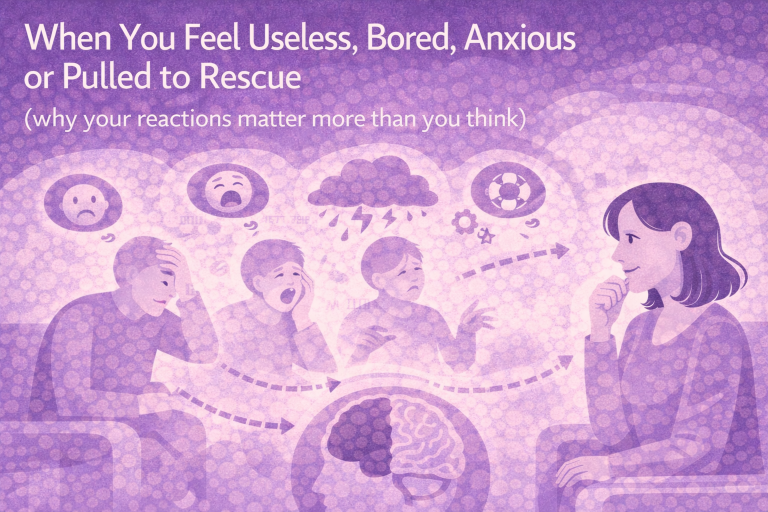
When You Feel Useless, Bored, Anxious or Pulled to Rescue
(Why Your Reactions Matter More Than You Think) There are moments in therapy we rarely speak about openly. Moments when you feel oddly flat.Restless.Anxious.Pulled to reassure or fix.Quietly ineffective. These reactions can feel uncomfortable – even unprofessional. We’re trained to focus on the client’s internal world, not our own. And yet, attachment-informed practice asks us…
When Agreement Isn’t the Same as Engagement
When Agreement Isn’t the Same as Engagement I’ve been thinking about clients who agree with everything I say, and how easy it is for me to experience that as engagement. And sometimes, of course, it is. Sometimes I say something and the client says, “Yes, that’s exactly it,” and I can feel that something has…
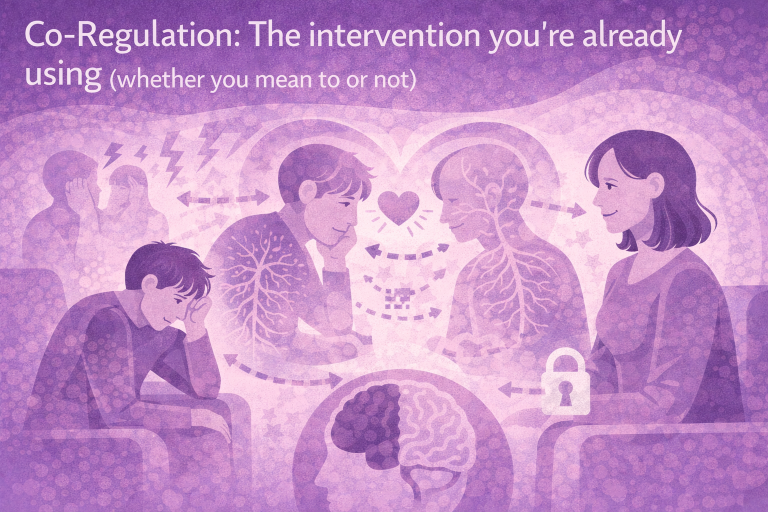
Co-Regulation: The Intervention You’re Already Using
(Whether You Mean To or Not) Most therapists don’t remember being taught about co-regulation. And yet, if you sit with clients day after day, you are using it constantly. Often without naming it.Often without planning it.Sometimes without realising how powerful it is. Co-regulation isn’t a technique you “apply”. It’s something that happens between nervous systems…
Wired for Connection: Attachment, Loneliness, and Love in the Age of AI
We are, at our core, relational beings. Wired for Connection: Attachment, Loneliness, and Love in the Age of AI We are, at our core, relational beings. From our first breath, we are wired to seek safety, comfort, and meaning through connection with others. Attachment is not a luxury of childhood — it is the survival…
This is just how I’ve always reacted
It’s a common phrase in therapy—but it’s not the truth. Stress responses aren’t fixed traits. They’re learned patterns shaped by early attachment—and they can be rewired through relational healing