
When the Memory Isn’t the Only Thing in the Room EMDR can be incredibly powerful. I have seen it help clients move through memories they have carried for years, reduce the emotional charge around what happened and finally begin to feel that the past is in the past. But sometimes the work doesn’t move in…
-
-
When Agreement Isn’t the Same as Engagement
When Agreement Isn’t the Same as Engagement I’ve been thinking about clients who agree with everything I say, and how easy it is for me to experience that as engagement. And sometimes, of course, it is. Sometimes I say something and the client says, “Yes, that’s exactly it,” and I can feel that something has…
-
Knowing Attachment Theory Is Not the Same as Using It
Knowing Attachment Theory Is Not the Same as Using It I’ve been thinking about the difference between knowing attachment theory and actually using it in the therapy room. Because I think a lot of us know the basic ideas. We know early relationships matter. We know clients can move towards closeness, pull away from it,…
-
How Attachment Training Shaped My Professional Identity as a Therapist
Not the letters after our name, or the modality we put on a directory profile because we have to choose something from a drop-down box. I mean the deeper question of what actually shapes the way we sit with clients. What is the lens we look through? What helps us make sense of what is…
-
The Therapeutic Relationship as a Secure Base in Attachment Therapy
The Therapeutic Relationship as a Secure Base I’ve been thinking about how easily I can get caught up in trying to find the right intervention. The right thing to say, the right question, the right bit of theory that will help the client move from where they are. And of course, interventions matter. I’m not…
-
Building a Picture of a Client’s Internal World
How I Build a Picture of a Client’s Internal World I’ve been thinking about how I start to build a picture of a client’s internal world. Not just by listening to the story, although of course the story matters. I’m also listening to the body, the pauses, the shame, the little flinches, the way the…
-
Why Understanding a Client’s Internal World Can Reduce Therapist Panic
I’ve been thinking about when I feel panic in the therapy room. Not full-blown panic, necessarily. More that quiet, internal scrambling that can creep up when the work starts to feel complex. Suddenly, I can feel myself trying to find the right thing to say, make the right intervention, ask the right question, or produce…
-
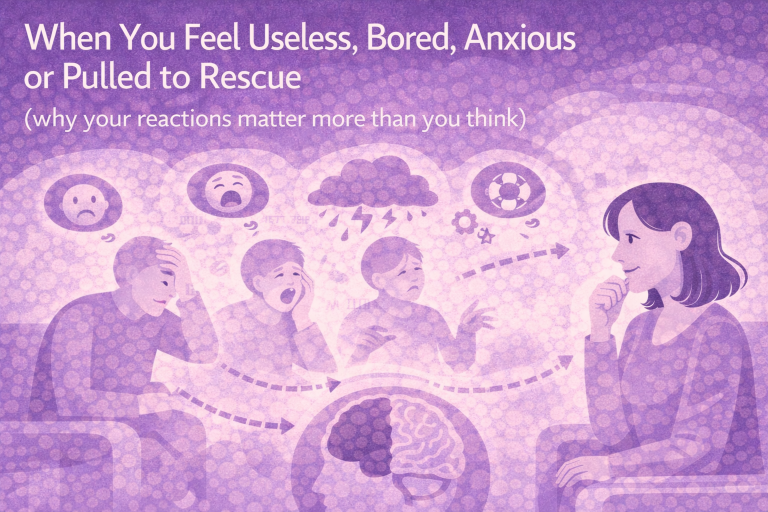
When You Feel Useless, Bored, Anxious or Pulled to Rescue
(Why Your Reactions Matter More Than You Think) There are moments in therapy we rarely speak about openly. Moments when you feel oddly flat.Restless.Anxious.Pulled to reassure or fix.Quietly ineffective. These reactions can feel uncomfortable – even unprofessional. We’re trained to focus on the client’s internal world, not our own. And yet, attachment-informed practice asks us…
-
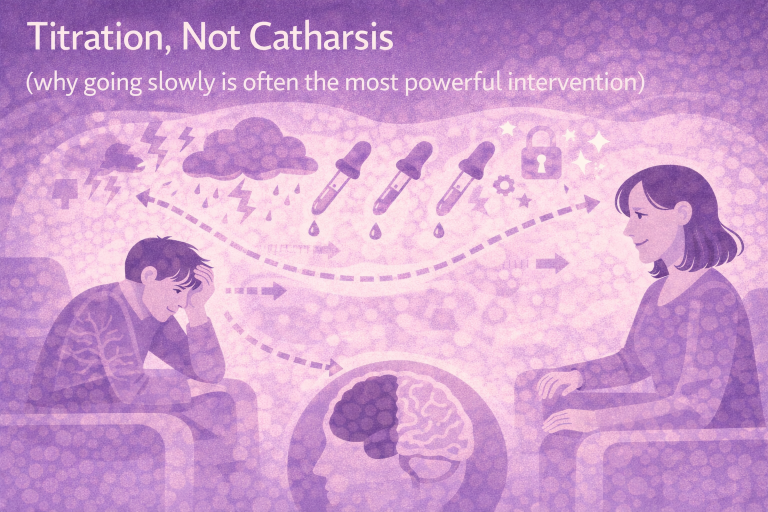
Titration, Not Catharsis
(Why Going Slowly Is Often the Most Powerful Intervention) There’s a quiet pressure many counsellors feel – even if they don’t name it. That therapy should go somewhere.That something should happen.That emotional release equals progress. And when clients carry trauma, there can be an added, unspoken belief:If we don’t access the pain fully, are we…
-
When Clients Fear Calm More Than Chaos
(Why Safety Can Feel Like a Threat) There’s a moment in therapy that can quietly unsettle even experienced counsellors. The work has been steady.The client feels more regulated.Sessions are calmer.There’s less crisis, less urgency. And then – something shifts. The client becomes anxious again.They create conflict.They miss a session.They suddenly question the therapy itself. It…