Let’s Listen
Listen
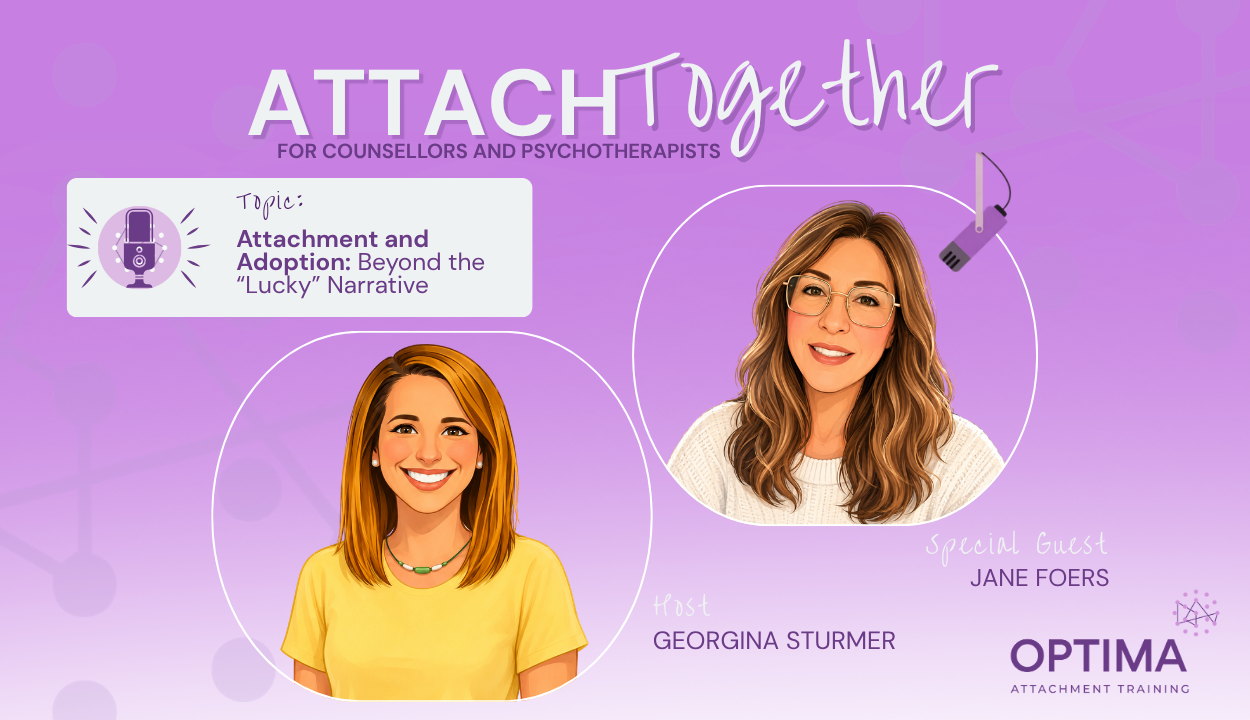
Attachment and Adoption: Beyond the “Lucky” Narrative
Attachment and adoption in therapy requires an understanding of attachment theory, attachment styles, relationships and the ways early separation may emerge within counselling. In this episode of Attached Together, Georgina speaks with attachment-focused psychotherapist Jane about working therapeutically with adults impacted by adoption.
Jane trained alongside Georgina on the Optima Level 5 course and now works in private practice, predominantly with adults affected by adoption. She brings both clinical knowledge and lived experience as an adoptee.
Attachment and adoption in therapy can be understood as therapeutic work that considers how separation, disrupted caregiving, identity development, grief and relational trauma may influence an adoptee’s sense of safety, belonging and connection.
In this episode
Jane and Georgina explore:
- How adoption practices have changed over time
- Why there is no single adoptee attachment style
- Anxious, avoidant and disorganised attachment strategies
- Identity, belonging and genetic mirroring
- Grief, anger and the pressure to feel “lucky”
- Push-pull dynamics in the therapy relationship
- Body-based regulation and “adoption overwhelm”
- The importance of carefully managed breaks and endings
- Therapist self-awareness, competence and supervision
Adoption is not one experience. Some adult adoptees may fear abandonment and seek reassurance, while others may protect themselves through emotional distance, self-sufficiency or withdrawal. Attachment and adoption in therapy therefore requires curiosity rather than assumptions.
The conversation also considers how missing family stories, early disruption and the absence of genetic mirroring may affect identity. Because some experiences originate before language, clients may communicate them through bodily states, metaphors or relational patterns rather than a clear narrative.
Common questions
What is adoption trauma?
Adoption trauma refers to the emotional or relational impact that separation, loss, disrupted caregiving and identity uncertainty may have on an adopted person. Not every adoptee will use this term, so therapists should follow the client’s language.
How can adoption affect attachment styles?
Early separation, neglect, trauma or changes of caregiver may influence how a person approaches trust, closeness and dependency. Some adoptees may seek connection intensely, while others may rely on compulsive self-reliance.
How might adoption appear in therapy?
Adoption may emerge through difficulties with trust, identity, belonging, control, grief, anger or endings. It may also appear through push-pull dynamics between therapist and client.
How can therapists work in an adoption-informed way?
Use the client’s preferred terminology, avoid assumptions, build relational safety, notice attachment dynamics and plan carefully for absences and endings.
Chapters
00:00 Introduction
01:51 The changing history of adoption
05:11 Attachment strategies in adult adoptees
07:15 Identity and genetic mirroring
09:35 Adoption-informed therapy
10:19 Language, grief and the “lucky” narrative
13:29 Push-pull dynamics in therapy
15:20 Building a secure therapeutic base
15:41 Body-based work and adoption overwhelm
17:49 Breaks and therapeutic endings
19:58 Competence, supervision and self-awareness
21:08 Final reflections and CPD information
Resources and continued learning
Approaches discussed include attachment-informed psychotherapy, mentalisation, grief work, inner-child work, therapeutic letter writing, body awareness and regulation.
To learn more about the Level 5 and Level 7 Diplomas in attachment theory and attachment-based psychotherapy, visit the Optima Health Services website.
Listen to the episode and reflect on what attachment and adoption in therapy may require within your own clinical practice.