Let’s Listen
Listen
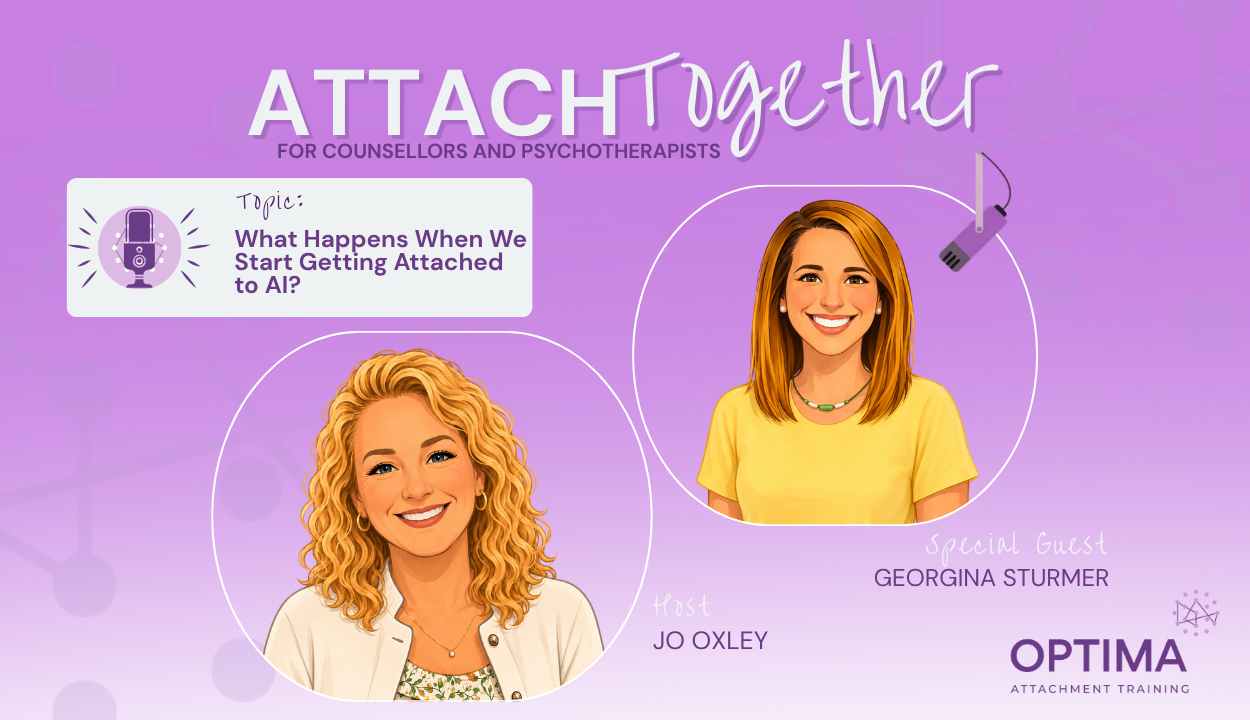
What Happens When We Start Getting Attached to AI?
What happens when an AI relationship starts to feel safer, easier or more dependable than a relationship with another person?
In this episode of Attached Together, Jo, psychotherapist and clinical supervisor, is joined by Georgina Sturmer, an integrative attachment-based therapist, supervisor and lecturer in counselling and on Optima Attachment Training’s Level 5 Diploma.
Their conversation looks at AI relationships and attachment from an unusually human angle. What begins with chatbots offering encouragement soon moves into AI companions, romantic partners and avatars designed to recreate people who have died.
That raises some uncomfortable questions.
If somebody can recreate the voice and characteristics of a person they have lost, could that support a continuing bond in grief — or make it harder to face the reality of the loss? And what happens when somebody creates an AI version of an ex-partner, or potentially even their therapist?
The conversation considers why AI and attachment styles may be particularly interesting for therapists. Someone with anxious attachment might be drawn to the reassurance of something that is always available. Someone with avoidant attachment may find closeness easier when it does not require the same interpersonal vulnerability. For someone with disorganised attachment, the predictability of AI may offer relief from relationships that have previously felt chaotic or unsafe.
Jo and Georgina also consider what AI cannot easily reproduce.
Therapy is not simply about receiving empathic words. It involves two separate minds, embodied co-regulation, boundaries, misunderstanding, transference and countertransference — and the experience of rupture and repair.
The episode introduces the provocative idea of AI becoming a “pseudo-secure base”: something that appears to offer reliable soothing and security while potentially leaving the person increasingly dependent on something that cannot participate in a reciprocal human relationship.
The discussion includes:
• AI companions, avatars and romantic relationships
• grief, continuing bonds and recreating someone who has died
• the Eliza effect and attributing human qualities to technology
• anxious, avoidant and disorganised attachment patterns
• reassurance, emotional regulation and dependency
• mentalisation and the importance of a genuinely separate mind
• human co-regulation and embodied relationships
• transference, fantasy and AI versions of therapists
• rupture and repair
• how therapists can respond without shame or premature judgement
Rather than deciding whether these relationships are simply good or bad, the episode returns to a more useful clinical position: curiosity about what the relationship provides and what need the person may be trying to meet.
Optima Attachment Training:
Optima Attachment Training
Listeners can also access a CPD certificate for this episode:
Access the CPD certificate