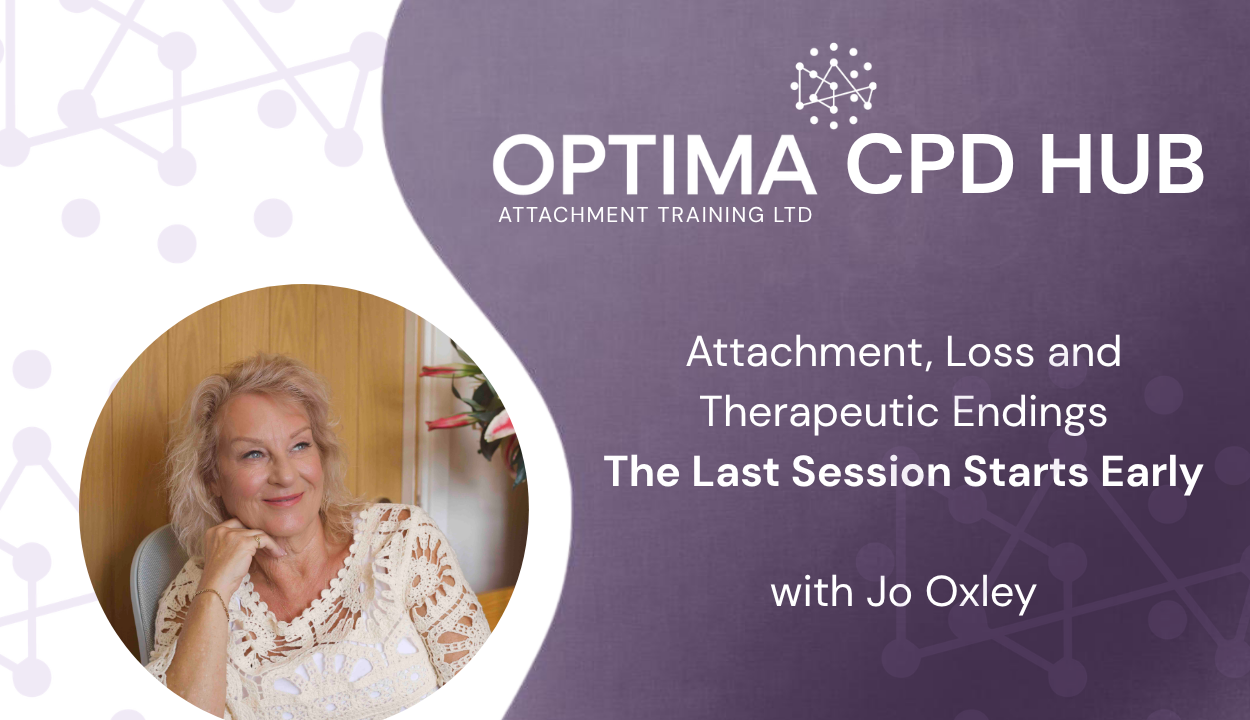
How we end therapy matters.
We spend a great deal of time thinking about how therapeutic relationships begin: contracting, establishing safety and building trust. But the ending deserves just as much attention.
In this OPD session, Jo Oxley explores therapeutic endings through an attachment-focused lens, considering why the ending often enters the relationship long before the final session.
For some clients, finishing therapy may bring sadness, pride, relief and growing autonomy. For others, separation can reactivate earlier experiences of being left, forgotten or emotionally dropped. We explore how secure, anxious/preoccupied, avoidant/dismissing and disorganised/unresolved attachment strategies may shape responses to therapeutic endings, and what might sit beneath the behaviours we see in the therapy room.
The focus isn’t only on the client. Therapists have attachment systems too. Endings may leave us wanting to rescue, reassure, extend the work, withdraw or make things tidy. Becoming curious about our own responses can help us remain emotionally present while maintaining therapeutic boundaries.
We’ll also consider time-limited and long-term therapy, unfinished work, clients who end suddenly, therapist-led endings, and the opportunities for rupture and repair as therapy comes to a close.
Rather than trying to create a perfect ending, we’ll think about what makes a good-enough therapeutic ending: one where progress and loss can coexist, unfinished work can be acknowledged, and the client can begin to carry something of the therapeutic relationship forward.
Perhaps therapy isn’t only about helping people to attach. It can also offer an experience of separation that feels different from those that have come before — where a relationship can matter deeply and still end with safety, dignity and understanding.
Suitable for: Counsellors, psychotherapists, trainee therapists and supervisors interested in attachment-based and relational approaches.
You will explore:
- Why therapeutic endings matter
- Attachment strategies and responses to separation and loss
- The therapist’s own attachment response
- Dependency, autonomy and internalisation
- Sudden, unfinished and therapist-led endings
- Rupture and repair at the end of therapy
- Creating a good-enough, clinically meaningful ending