Similar Posts
Why Understanding a Client’s Internal World Can Reduce Therapist Panic
I’ve been thinking about when I feel panic in the therapy room. Not full-blown panic, necessarily. More that quiet, internal scrambling that can creep up when the work starts to feel complex. Suddenly, I can feel myself trying to find the right thing to say, make the right intervention, ask the right question, or produce…
Attachment Night Vision: Seeing Beneath the Surface in Psychotherapy
Therapists don’t just listen to stories—they read bodies. This article explores how attachment theory and somatic awareness can give clinicians “night vision” to detect what’s unspoken: the nervous system responses shaped by trauma and care. Learn to work with the body as a storyteller in relational healing
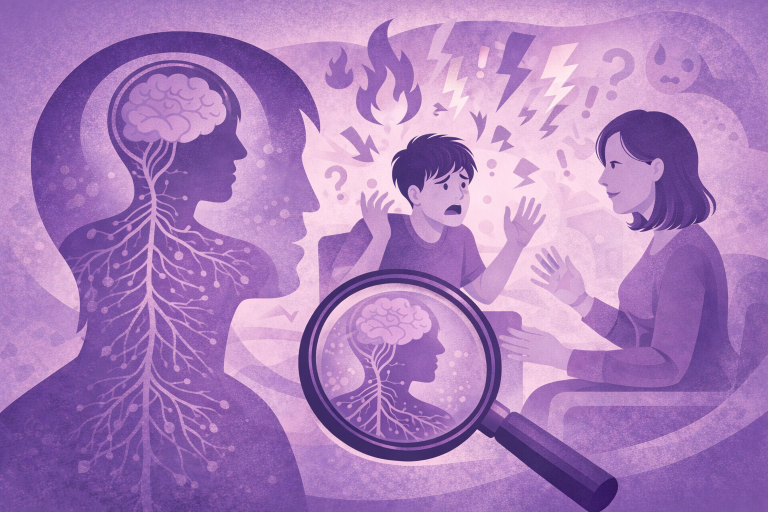
The Client Who “Overreacts”
(A Nervous System Doing Its Job) There is a particular kind of moment in therapy that can catch even experienced counsellors off guard. A client reacts strongly – suddenly, intensely, and in a way that feels disproportionate to what’s just happened. A raised voice.Tears that arrive without warning.A sharp withdrawal.A look of panic, shame, or…
The Science of Connection: How Oxytocin Supports Breakthroughs in Therapy
How Oxytocin Supports Breakthroughs in Therapy As counsellors, we see first-hand how attachment wounds shape our clients’ struggles. But beyond theory, there’s a biological side to healing too—our brains are wired for connection, and neurochemicals play a vital role in the therapeutic process. Oxytocin, often called the “bonding hormone,” is key. It’s released through safe,…
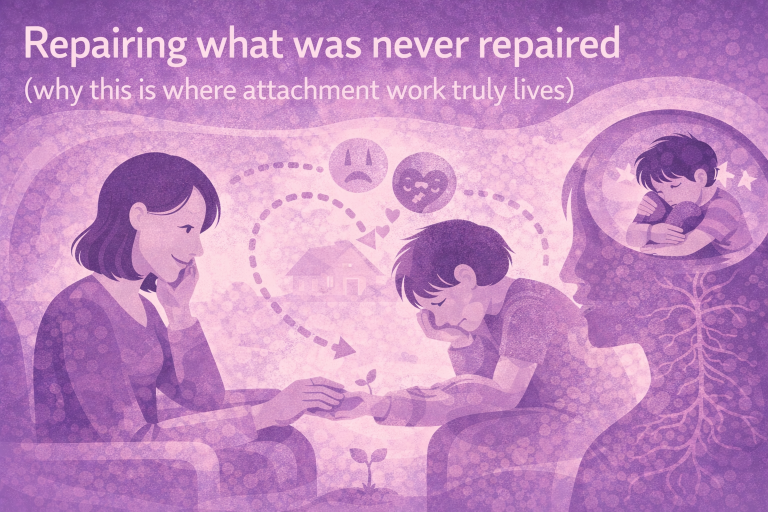
Repairing What Was Never Repaired
(Why This Is Where Attachment Work Truly Lives) There’s a common misconception in therapy that change happens in moments of insight. A realisation lands.A pattern makes sense.A link to childhood becomes clear. These moments matter – but in attachment-informed work, they’re rarely where the deepest healing occurs. That happens somewhere else entirely. It happens in…
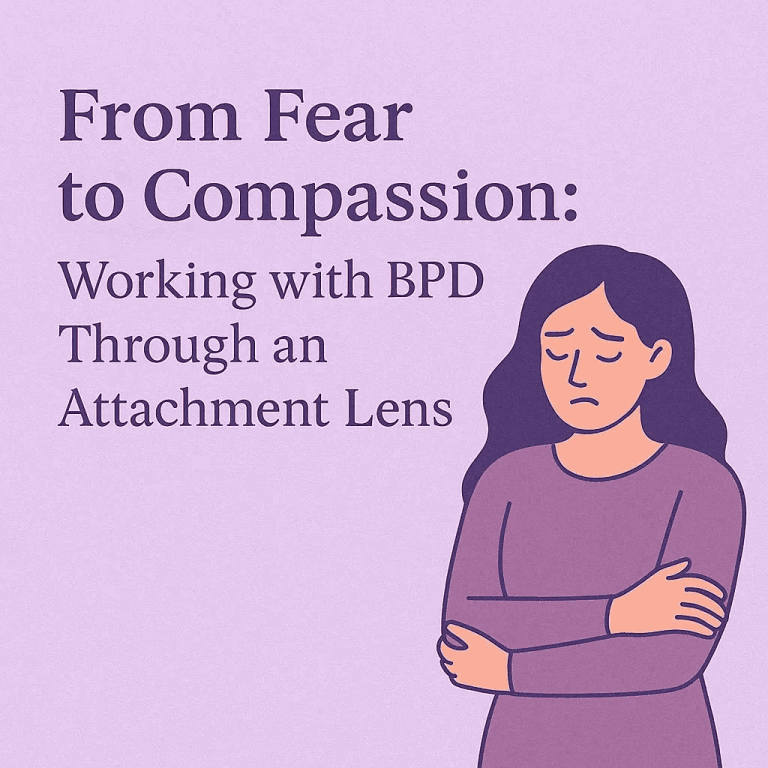
From Fear to Compassion: Working with BPD Through an Attachment Lens
Borderline Personality Disorder is often met with fear in clinical spaces—but through the lens of attachment theory, we see not manipulation, but survival. This piece reframes BPD with compassion and grounded therapeutic insight