Similar Posts
Beyond Bowlby: The Roots of Attachment Theory
Neuroscience: Bowlby’s Ideas Meet the Modern Brain Bowlby’s brilliance lay not only in his observations but in his ability to weave ideas from multiple disciplines into a coherent model of human connection. For clinicians, understanding these influences can provide richer insight into why early relationships are so foundational.Neuroscience: Bowlby’s Ideas Meet the Modern Brain While…
Attachment Night Vision: Seeing Beneath the Surface in Psychotherapy
Therapists don’t just listen to stories—they read bodies. This article explores how attachment theory and somatic awareness can give clinicians “night vision” to detect what’s unspoken: the nervous system responses shaped by trauma and care. Learn to work with the body as a storyteller in relational healing
Why A Renew and Reconnect Couples Retreat Works Better Than You Think
When most people hear the words “couples retreat,” they imagine something halfway between a spa break and a reality show — scented candles, a bit of yoga, possibly some awkward confession circles, and someone weeping into a herbal tea. What happens at a couples retreat? But the reality of a couple’s therapy retreat is something…
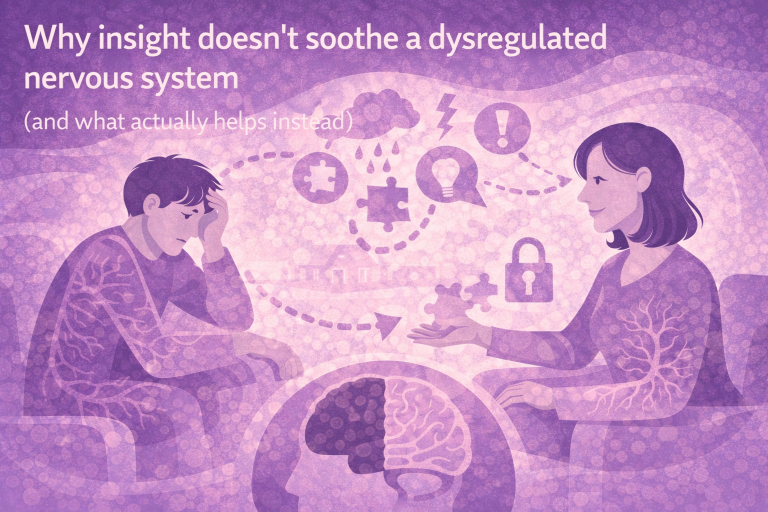
Why Insight Doesn’t Soothe a Dysregulated Nervous System
(And What Actually Helps Instead) There’s a familiar experience many counsellors share – often with a hint of frustration they feel they shouldn’t admit. The client understands. They can name the pattern.They can trace it back to childhood.They can explain exactly why they react the way they do. And yet… nothing changes. The same anxiety…
Isn’t attachment just about relationships?
Attachment isn’t just about relationships—it shapes how we regulate stress and emotions. This article explores how early relational experiences wire our nervous system and why co-regulation in therapy is key to healing affect dysregulation